
A clear definition
An eye exam is a structured clinical evaluation of how well you see and how healthy your eyes appear. In everyday language people often say “eye test,” but clinicians usually distinguish between a quick vision screening and a comprehensive eye and vision examination.
A screening might ask you to read a few letters on a chart during a school or workplace check. A comprehensive exam is designed to measure visual acuity, determine refractive error when needed, assess how the eyes focus and work together, and examine ocular structures for signs of disease or injury.
Authoritative consumer education from groups such as the American Optometric Association (AOA), the American Academy of Ophthalmology (AAO), the National Eye Institute (NEI), and MedlinePlus emphasizes that some sight-threatening conditions can develop with few early symptoms. That is one reason a full exam is more than a glasses update.
What a comprehensive exam typically covers
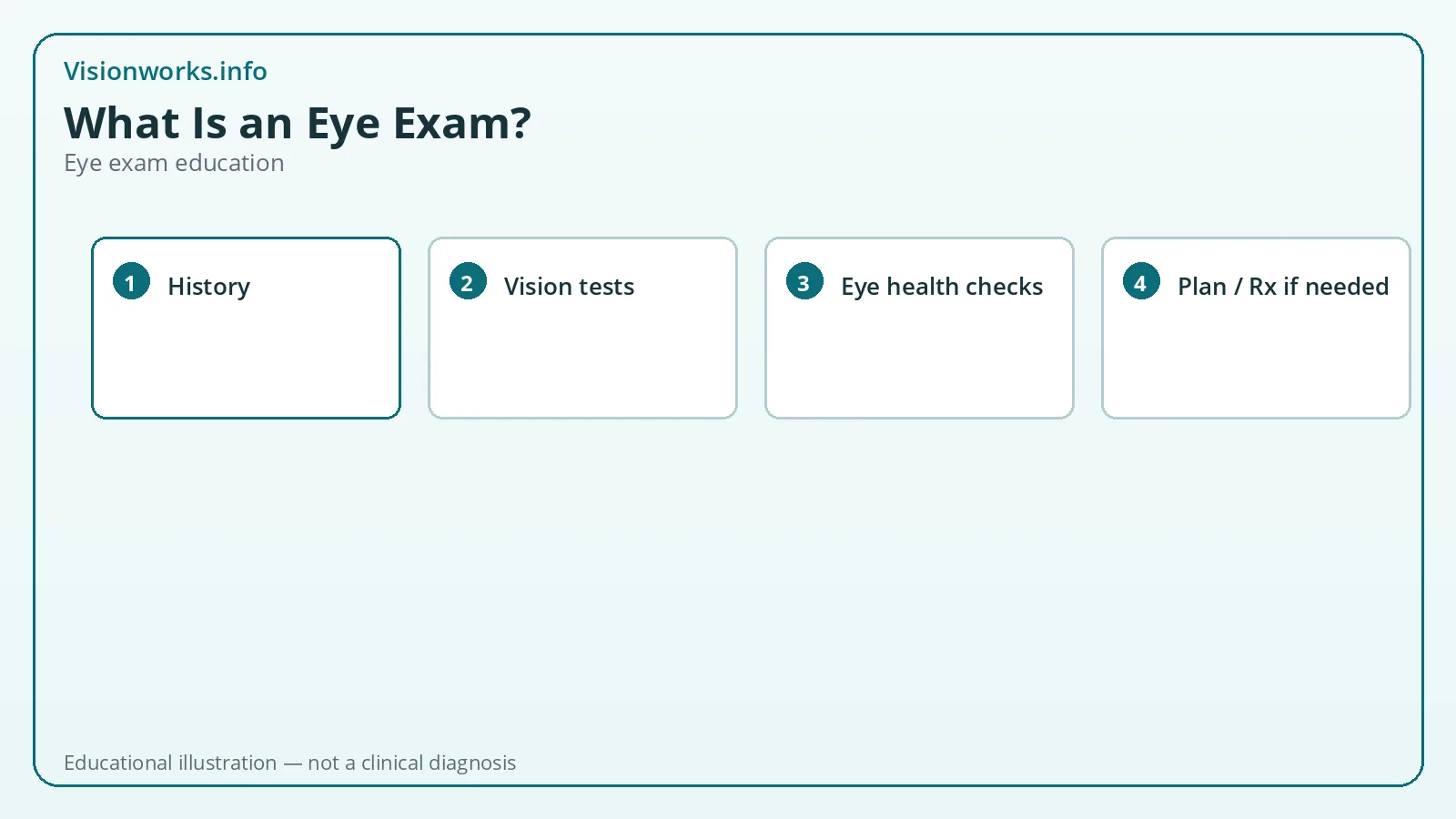
Exact steps vary by age, symptoms, medical history, and the clinician’s judgment. Still, adult and pediatric comprehensive exams commonly include several building blocks that work together as a whole assessment rather than a single number.
- History: vision complaints, medications, systemic conditions (such as diabetes or hypertension), family eye history, and visual demands at work or school.
- Visual acuity: how clearly each eye resolves detail at distance and near, usually with a standardized chart under controlled conditions.
- Refraction: measurement of focusing error (myopia, hyperopia, astigmatism, and near-add needs when relevant) using objective and subjective methods.
- Binocular and focusing tests: how the eyes align, track, and sustain clear near vision.
- Eye health assessment: external structures, anterior segment, pressure measurement when indicated, and a view of the retina and optic nerve — often aided by dilation.
Because these components answer different questions, “I can still pass a chart” does not automatically mean every part of the exam is unnecessary. Acuity describes one functional outcome; health findings and binocular comfort are separate clinical domains.
Eye exam vs vision screening vs optical shopping
Confusion is common because retail optical stores, primary-care offices, schools, and specialty eye clinics all use vision-related language. Educationally, it helps to sort three different goals.
- Vision screening: a brief pass/fail style check intended to flag people who may need a full exam. It is not designed to diagnose disease or finalize a prescription.
- Comprehensive eye exam: a clinician-led evaluation of vision function and eye health with documentation, counseling, and follow-up recommendations.
- Eyewear selection and dispensing: choosing frames, lens materials, coatings, and verifying that lenses match a valid prescription — important, but not a substitute for the exam that produced the prescription.
Online refractive questionnaires and uncalibrated phone charts may feel convenient. They cannot safely inspect the retina, measure intraocular pressure with clinical methods, or evaluate many binocular problems. Treat them as learning aids at best.
Why people schedule exams even without blur
People often wait for blur before booking. That strategy misses silent or slowly progressive conditions that clinicians look for during health portions of the visit. NEI educational materials on dilated exams highlight that dilation helps clinicians check for problems such as diabetic retinopathy, glaucoma-related optic nerve change, and age-related macular degeneration earlier than symptoms alone might allow.
Frequency recommendations are not a single universal rule for every person. Age, prior findings, contact lens wear, diabetes, high myopia, family history, medications, and occupational visual demands all influence how often a clinician may recommend return visits. See our companion guide on exam frequency for a careful breakdown.
Children deserve special mention: vision problems can affect classroom performance, and some binocular or refractive issues are easier to manage when identified earlier. Pediatric exam elements and communication strategies differ from adult visits.
What you leave with
After a comprehensive exam you may receive confirmation that vision is stable, a new or unchanged glasses or contact lens prescription, treatment for an ocular surface issue, referral for specialty care, or a plan to monitor a finding over time. Not every visit ends with new glasses — and not every prescription change means disease.
If you receive a U.S. eyeglass prescription, federal consumer-protection education around the FTC Eyeglass Rule discusses prescription release after a refractive exam. That is a consumer-rights topic, not medical advice about whether you “need” lenses.
Use educational tools on Visionworks.info to learn vocabulary — Snellen fractions, sphere and cylinder, PD, and common symptoms — then bring clearer questions to your clinician. Tools here do not diagnose or prescribe.
When professional care matters
Schedule an eye exam if you notice new blur, eye discomfort that persists, headaches tied to visual tasks, difficulty with night driving, or any sudden change in vision. Children, people with diabetes, and anyone with a history of eye disease often need scheduled professional monitoring rather than relying on online tools alone.
Seek urgent or emergency care for sudden vision loss, a curtain or shadow over vision, new flashes with many floaters, severe eye pain, chemical exposure, or eye trauma.